
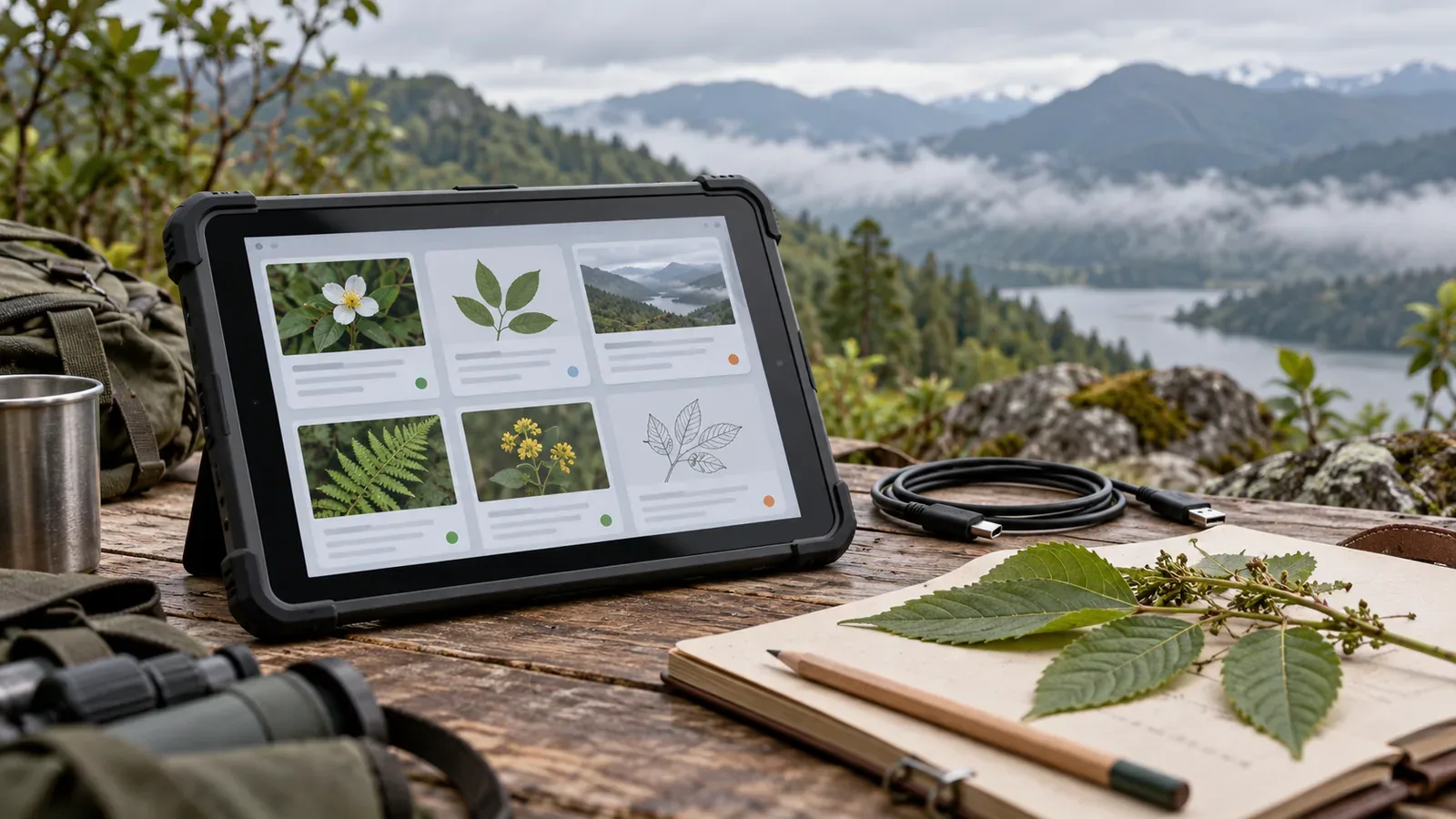
A survey worker records an observation beside a remote wetland. The mobile connection disappears before the server responds. The screen clears the form, but the office never receives the record. From the worker's perspective, the application has lost an afternoon's work even though the development team describes the feature as offline capable.
An offline-first mobile app needs a clear account of where work is saved and when it becomes shared. A cached reading screen does not establish that new observations can survive a closed app, a restarted device or a conflicting change from another person.
Decide what remains possible without the network
Consider a fictional ecological survey team collecting observations at assigned sites. Workers may need their current assignments, reference material and a way to capture notes while disconnected. They may not need to change organization membership or download every historical observation.
Define the critical offline tasks and prepare the required data before departure. Android's offline-first architecture guidance places this work in the data layer, with local and network sources serving distinct roles. The product decision is which information must remain available, how freshness is explained and what the worker can safely change.
Do not label an old assignment list current simply because it can still be displayed. Show when it was last synchronized and explain which operations require a connection. A useful offline state gives the worker a realistic basis for planning the day.
Confirm a local save before promising success
When an observation is captured, persist it to durable local storage before treating it as saved on the device. Keep a stable operation identifier and a pending synchronization state. A temporary message in memory should not be the only evidence of work that still needs to reach the office.
Use separate language for saved locally and synchronized. If a photo remains in the upload queue, the observation may be readable while its attachment is still pending. Let the worker inspect that distinction and retry the affected item without creating another observation.
During mobile app development, test the actual durability promise: capture a record, close the application, reopen it and locate the same pending work. The meaningful outcome is that the worker can continue confidently without reconstructing what they entered.
Choose conflict rules for each kind of information
While the worker is offline, an office reviewer might reassign a site or correct an existing observation. A last-write-wins rule can be suitable for some fields, but applying it indiscriminately may silently discard a meaningful contribution.
For this survey, new observations could be preserved as distinct records, while incompatible edits to an existing observation enter a review state. A changed site assignment should not erase work already captured there. Explain which decision the system made and retain enough context for an authorized reviewer to resolve uncertainty.
These are illustrative design choices, not a universal synchronization algorithm. The right policy depends on the meaning of the data and the consequences of a conflict. Write examples before choosing a library so the implementation can be evaluated against the intended behavior.
Test the transitions people actually experience
Try intermittent connectivity, a partially uploaded attachment, a device restart and an account whose authorization changes while disconnected. Define how the app protects locally retained information and what happens when shared access is no longer allowed.
End the test by asking the worker to identify what is safely on the device, what is shared and what needs attention. If that answer depends on opening a developer console, the synchronization model has not yet become a dependable product experience.